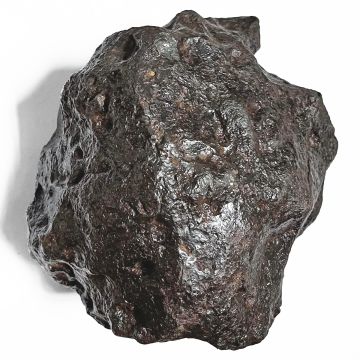


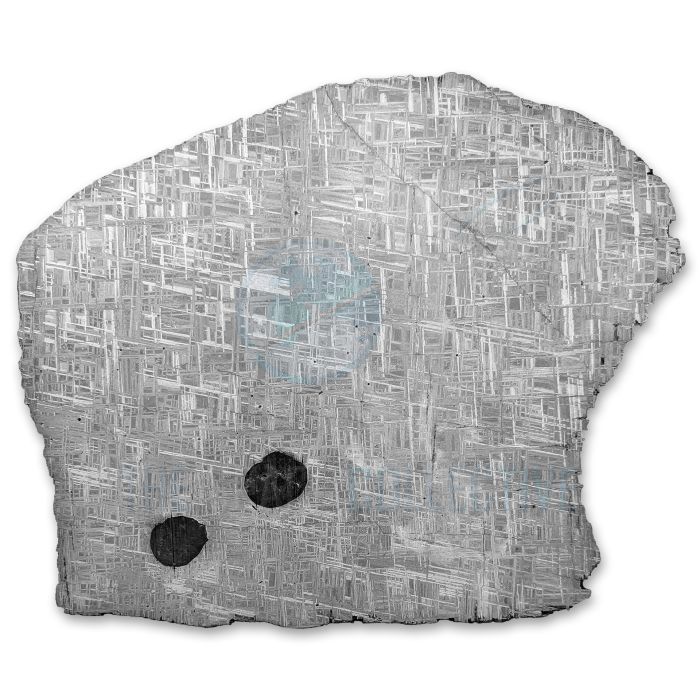
This etched 799g Muonionalusta meteorite specimen is cut from the Muonionalusta iron meteorite, first discovered in 1906 near the village of Kitkiöjärvi in northern Sweden. Classified as a fine octahedrite iron meteorite, it formed more than 4.5 billion years ago within the metallic core of an ancient differentiated asteroid. After cutting and polishing, the surface is acid-etched to reveal the natural Widmanstätten pattern, a crystalline structure of nickel-iron metal created by extremely slow cooling in space.
Muonionalusta meteorites are among the oldest known meteorites to have reached Earth and were deposited across northern Scandinavia thousands of years ago after falling onto a glacial ice sheet. As the glacier moved and eventually melted, fragments were distributed across the region where they are still recovered today. The etched surface displays the distinctive metallic crystal pattern preserved within the meteorite, making Muonionalusta specimens highly valued by meteorite collectors and scientific collections.