

A new addition to our permanent scientific collection: The Orgueil Meteorite
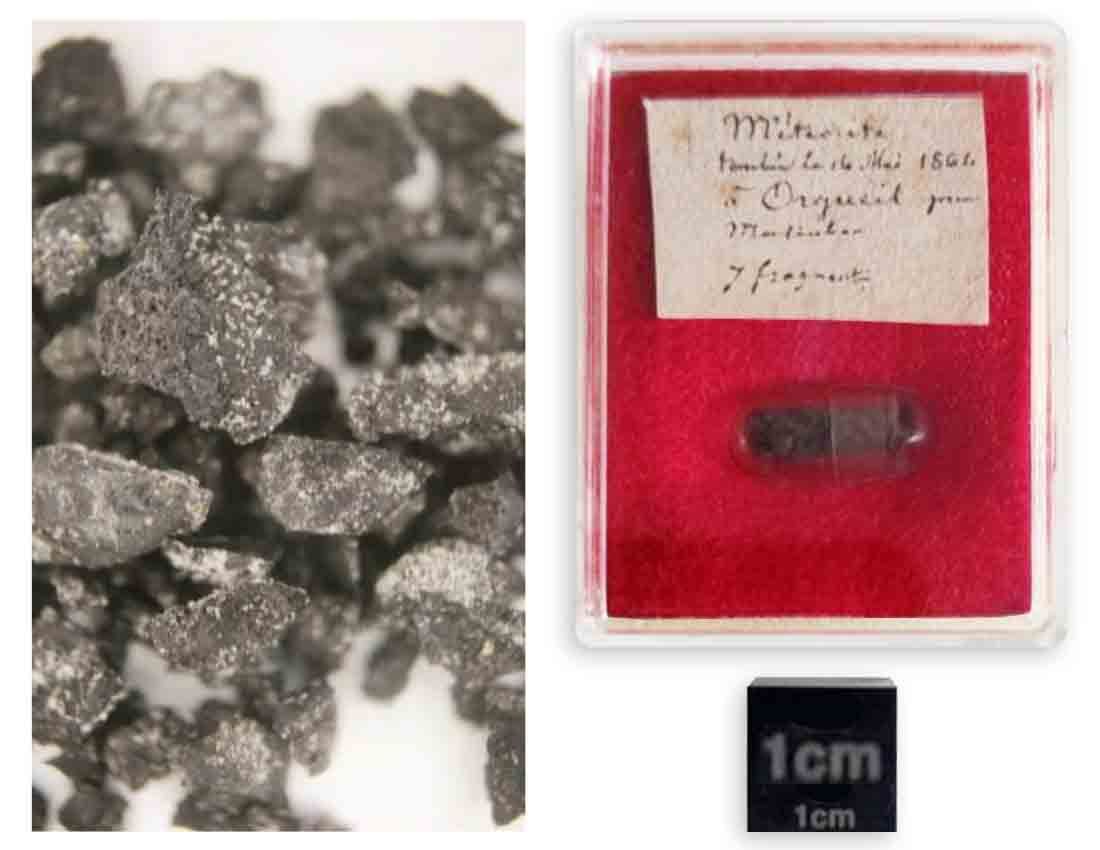
We are proud to announce a remarkable new addition to our permanent scientific collection: a 0.05 gram specimen of the Orgueil meteorite.
Though modest in size, these fragments represent some of the most primitive material known to science. Formed more than 4.5 billion years ago, Orgueil is not simply a meteorite. It is a preserved record of the earliest stages of our Solar System's history.
These small encapsulated pieces are now part of our long-term reference collection, serving as both a scientific benchmark and a tangible connection to the birth of planetary material.
Nearly as Old as the Solar System
Orgueil formed approximately 4.56 to 4.57 billion years ago. That places it among the oldest surviving solid materials from the solar nebula.
Its age aligns with the timeframe when the first solid particles condensed from the cloud of gas and dust that surrounded the young Sun. These early materials eventually assembled into asteroids, moons, and planets.
Orgueil preserves this original matter in a remarkably primitive state.
A Rare CI1 Carbonaceous Chondrite
Orgueil belongs to an extremely rare meteorite class known as CI1 carbonaceous chondrites. Only five CI meteorite falls are officially recognized worldwide, making them among the rarest scientifically studied meteorites on Earth.
Approximately 14 kilograms were recovered after the fall in southern France in 1864, making Orgueil the largest known CI meteorite fall. Even so, that total mass is small in planetary-science terms, and most of the material remains preserved in institutional collections.
What makes CI meteorites exceptional is their chemistry. Excluding hydrogen and helium, their elemental composition closely matches that of the Sun’s outer layer. Because of this, CI chondrites are widely used as reference standards for Solar System elemental abundances.
In other words, Orgueil serves as a calibration stone for understanding planetary chemistry.
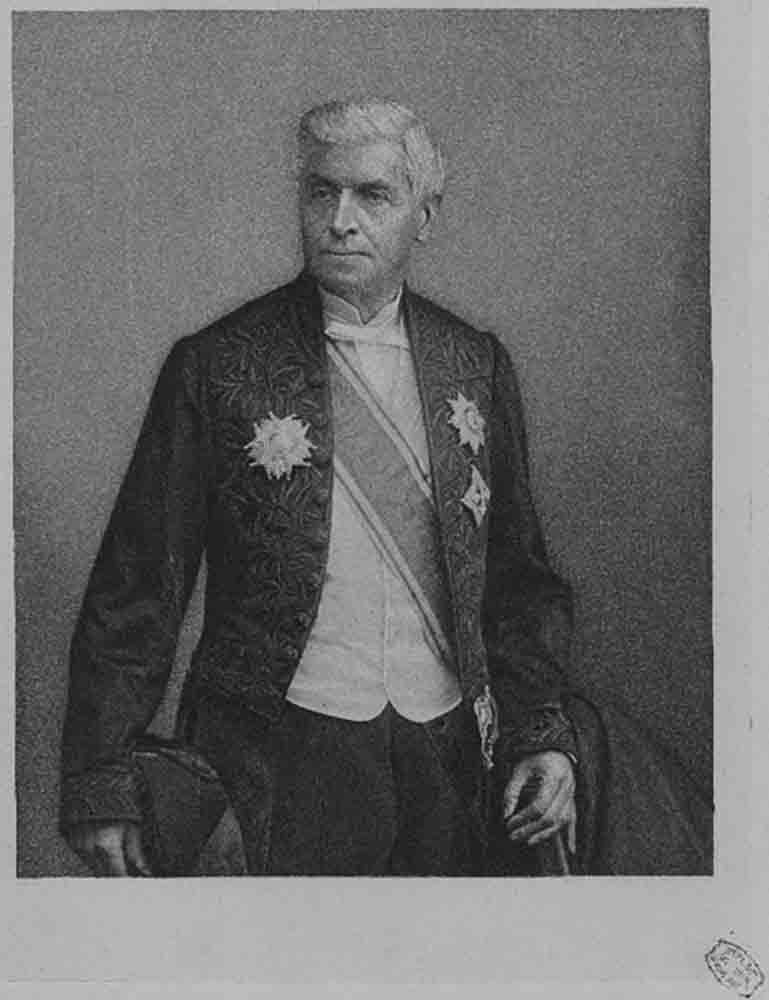
Early Scientific Study by Gabriel Auguste Daubrée
One of the first scientists to examine the meteorite in detail was Gabriel Auguste Daubrée, a prominent French geologist and mineralogist of the nineteenth century.
Daubrée was among the leading figures in early meteoritics and played an important role in the scientific analysis of the Orgueil fall. Through careful mineralogical and chemical study, he helped document the unusual composition of the meteorite and its fragile, carbon-rich structure.
His work contributed to the growing scientific understanding that meteorites represented primitive material from space rather than unusual terrestrial rocks. Daubrée later became well known for experimental research that simulated geological processes in laboratories, including studies of how meteorites and planetary materials form and evolve.
His early investigations of Orgueil helped establish the meteorite as an important scientific specimen and laid the groundwork for later research in cosmochemistry.
The Fall in 1864
On May 14, 1864, residents in southern France witnessed a bright fireball streak across the sky. Stones were later recovered near the village of Orgueil in Tarn-et-Garonne.
Scientists quickly began studying the unusual, dark, fragile rocks. Their high carbon content and chemical composition set them apart from other meteorites known at the time.
More than 160 years later, Orgueil remains one of the most studied meteorites in cosmochemistry.
Evidence of Ancient Water Activity
Minerals within Orgueil show extensive alteration caused by liquid water on its parent body early in Solar System history.
This tells us that the body from which Orgueil originated once contained ice that melted and chemically interacted with rock. These water-driven processes occurred billions of years ago, long before Earth formed oceans.
Such evidence helps researchers understand how volatile-rich material, including water-bearing minerals, may have been delivered to the early Earth.
Organic Molecules from Space
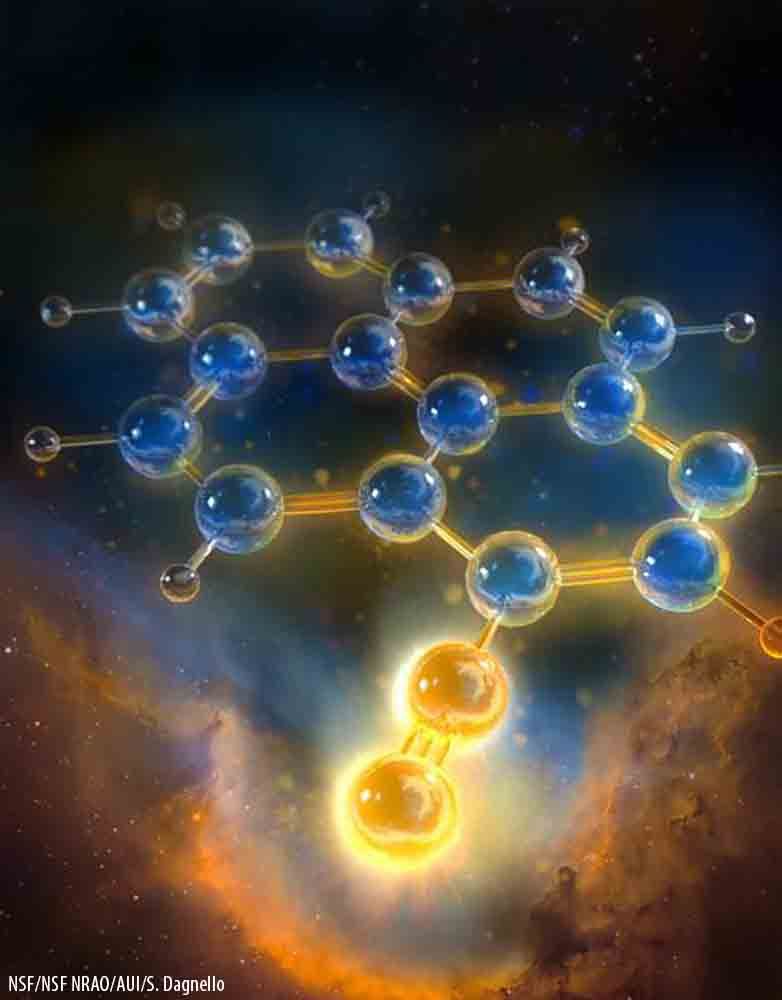
Orgueil is rich in complex organic compounds. Laboratory studies have confirmed the presence of extraterrestrial amino acids and a variety of carbon-based molecules formed through non-biological processes.
It is important to note that there is no confirmed evidence of fossilized life in Orgueil. Historical claims about biological structures were later shown to be due to contamination or misinterpretation.
What Orgueil provides is strong evidence that complex organic chemistry occurred naturally in the early Solar System. This makes it highly relevant to studies of prebiotic chemistry and the chemical environment that existed before life emerged on Earth.
Nitrogen and Primitive Mineral Chemistry
Orgueil contains nitrogen-bearing compounds, including ammonium. Recent mineralogical studies have identified ammonium incorporated within specific mineral phases, showing how nitrogen could be stored in primitive Solar System material.
These findings help scientists reconstruct chemical pathways in early asteroidal bodies and better understand volatile cycling in the young Solar System.
Why a 0.05 Gram Specimen Matters
Our 0.05-gram encapsulated piece may appear small, yet context is everything.
Out of roughly 14,000 grams recovered in 1864, 0.05 grams represents only a tiny fraction of the total known mass. Because CI meteorites are both rare and scientifically invaluable, even very small authenticated fragments carry significant importance.
For us, this specimen represents more than a collectible. It is a permanent scientific reference sample. It is physical evidence of material that formed before Earth fully assembled. It is a preserved chapter of Solar System formation, now part of our collection for study, documentation, and long-term preservation.
A Lasting Scientific Legacy
Few meteorites maintain scientific relevance across centuries of research. Orgueil continues to inform studies of Solar System formation, elemental abundances, aqueous alteration, and organic chemistry in space.
By adding this historic CI1 carbonaceous chondrite to our permanent collection, we are preserving a small but extraordinary fragment of cosmic history.
In only 0.05 grams, Orgueil captures the story of the earliest Solar System, recorded in stone for over 4.5 billion years.