

THE COMPLETE METEORITE GUIDE
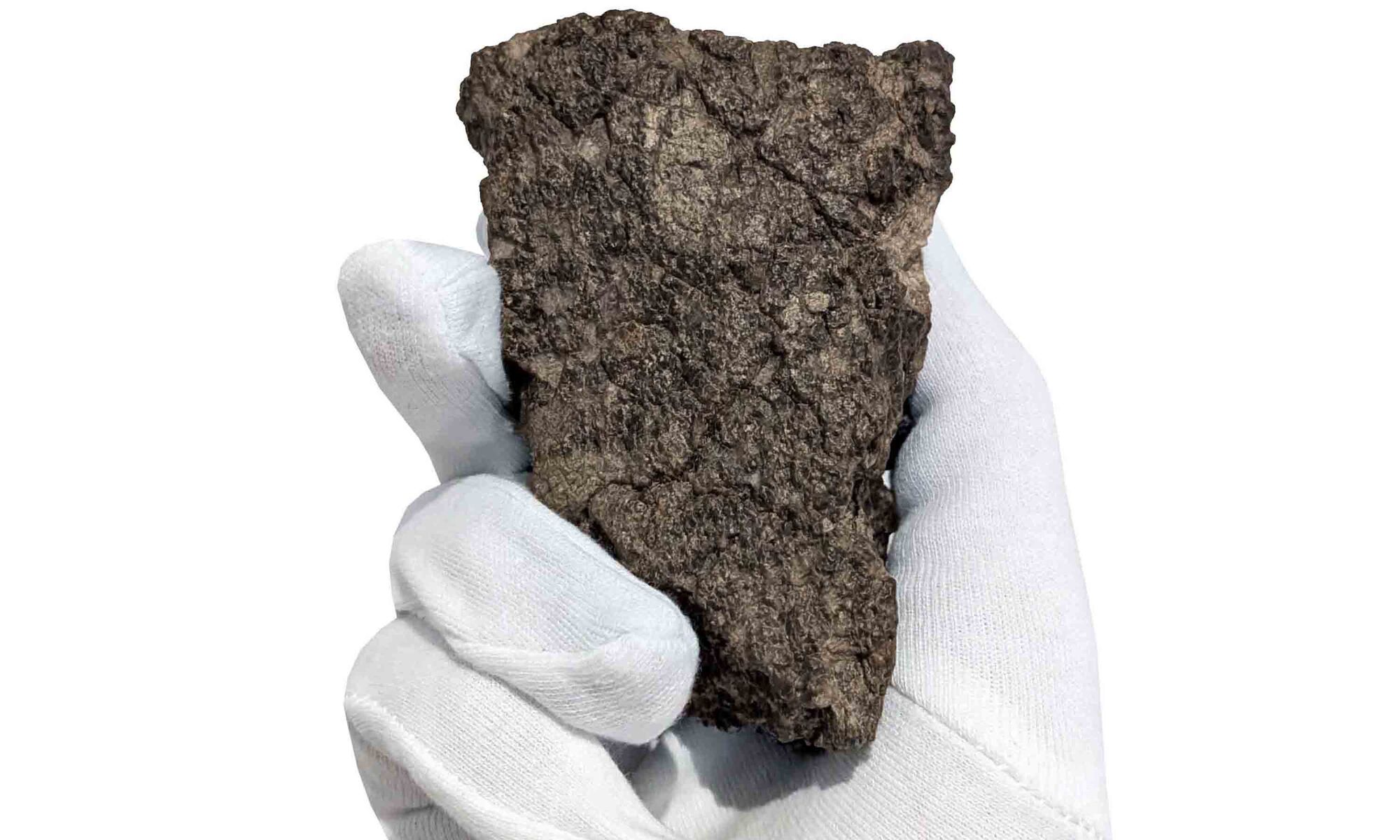
Meteorites are fragments of natural material that formed beyond Earth and survived their entry through Earth's atmosphere. They are studied because, unlike Earth’s rocks, many meteorites have remained chemically and structurally unchanged since the earliest period of solar system history.
While Earth’s surface has been reshaped by volcanoes, plate tectonics, erosion, and water, meteorites can preserve information that dates back over 4.5 billion years. This makes them essential to modern planetary science.
What is (and is not) a Meteorite?
Interestingly, most objects that enter the atmosphere are not meteorites, and understanding why requires looking at the process step by step.
First, a piece of natural material from space is known as a meteoroid. At this stage, it is simply a solid fragment moving through the solar system. Most come from asteroids, while a small number originate from the Moon or Mars.
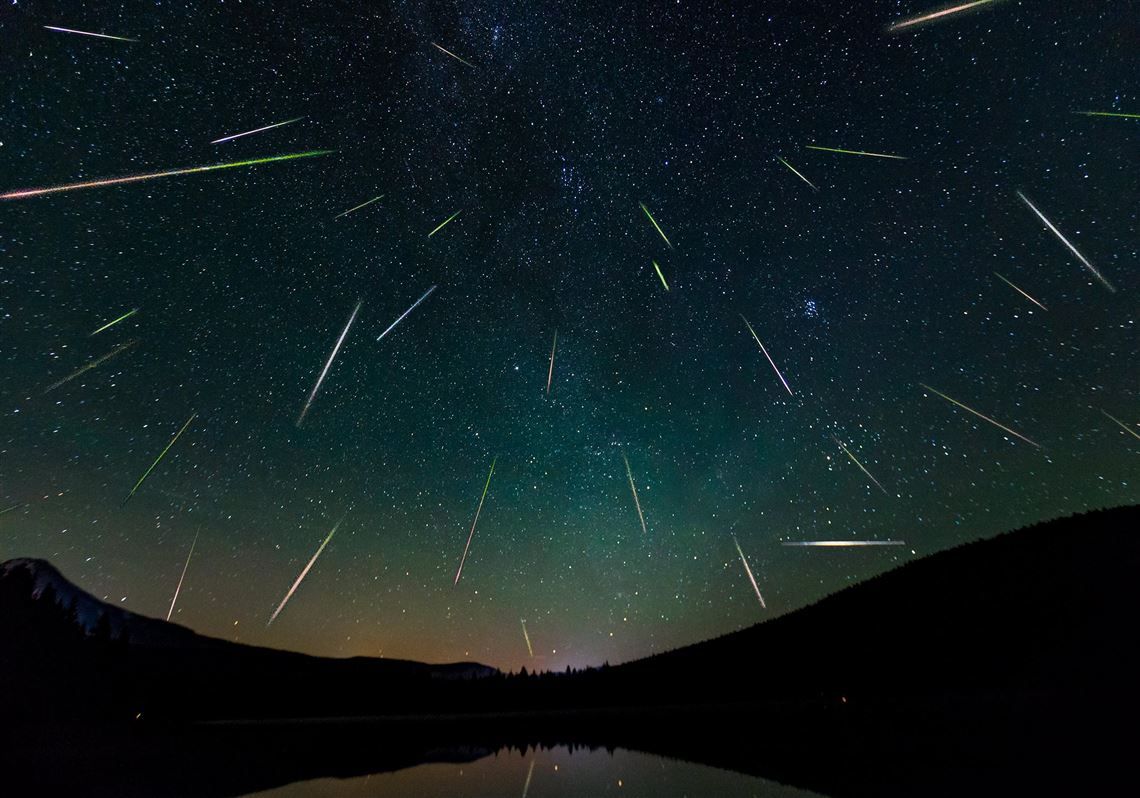
When a meteoroid enters Earth’s atmosphere, it becomes visible as a meteor, often seen as a streak of light in the sky. As the meteor travels at extremely high speed, air in front of the object compresses and heats up, producing the bright streak of light which we all know as a “shooting star.” During this phase, the object experiences intense heating and mechanical stress and begins to lose material rapidly.
If part of the object survives this violent passage and reaches Earth’s surface, it is then a meteorite. This final step is rare. Only a small fraction of incoming material survives long enough to make it to the ground. Most meteoroids are completely destroyed high in the atmosphere.
Just as important as knowing what a meteorite is is knowing what does not qualify.
Objects created by humans are not meteorites, even if they fall from space. This includes:
- Spacecraft or satellite debris
- Rocket stages or heat shield fragments
- Any manufactured metal or composite materials
Although these objects may survive atmospheric entry and land on Earth, they were made on Earth and are therefore not considered meteorites.
Certain natural phenomena also do not meet the definition:
- Microscopic space dust that burns up or settles slowly through the atmosphere
- Fireballs or meteors that leave no surviving material
- Atmospheric phenomena with no extraterrestrial solid remaining
The defining requirement is strict but straightforward: To be a meteorite, the object must be natural, solid, extraterrestrial material that survives atmospheric entry and physically reaches the ground.
Myth-Busting: Common Meteorite Misconceptions
“Is space junk a meteorite?”
No. Objects made by humans, such as satellites and rockets, are classified as space debris, not meteorites, regardless of where they fall.
“If it burns up in the atmosphere, is it still a meteorite?”
No. If no solid material reaches the ground, it does not qualify as a meteorite.
“Are shooting stars meteorites?”
Not usually. Most shooting stars are meteors that completely vaporize before reaching the surface.
“Is cosmic dust a meteorite?”
No. While cosmic dust comes from space, it does not arrive as a solid, intact object.
Where Meteorites come from (and how we know)
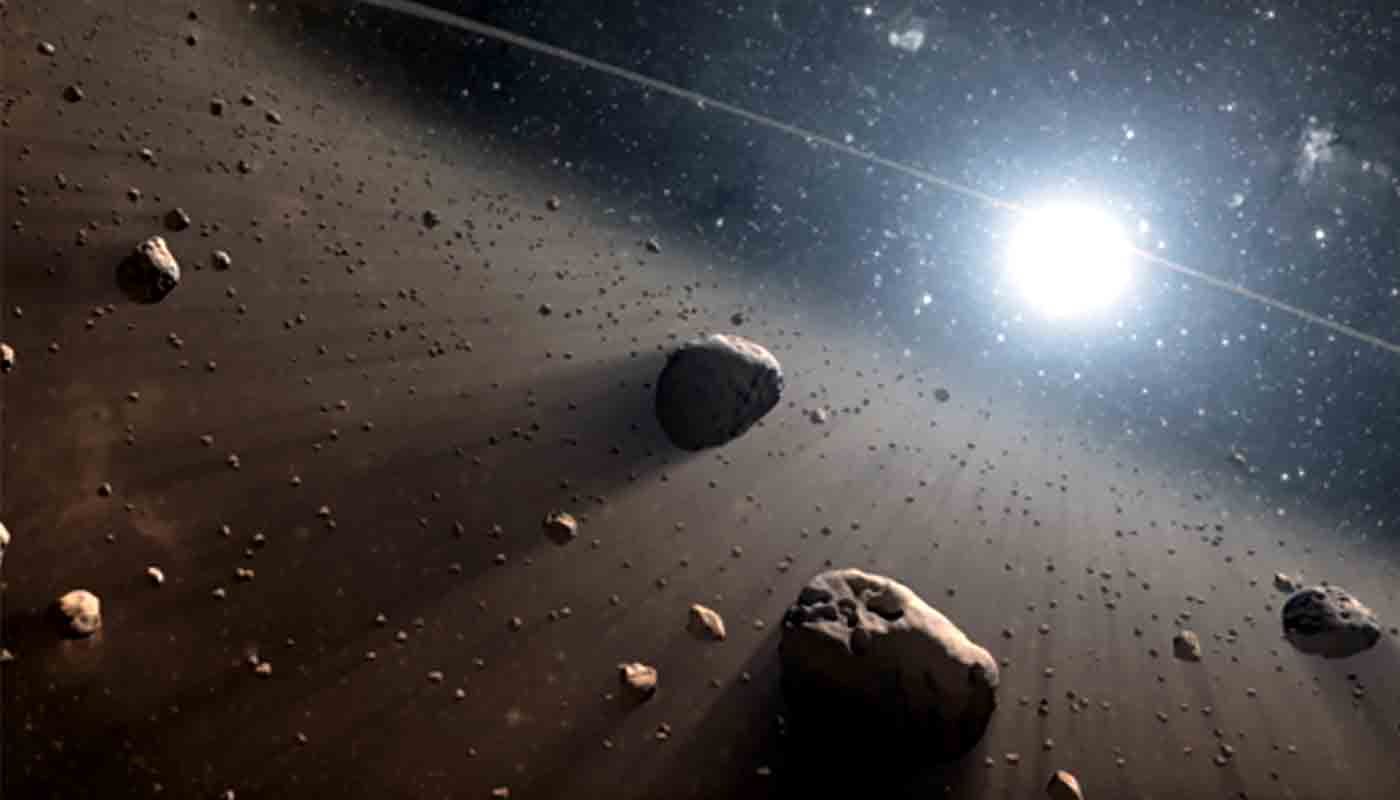
Meteorites come from several places in the solar system, but the vast majority share a common origin. Scientists are able to trace where meteorites come from by combining chemical analysis, laboratory measurements, telescopic observations, and orbital modeling.
ASTEROIDS
Most meteorites originate from asteroids, particularly those located in the asteroid belt between Mars and Jupiter. This conclusion is supported by several independent lines of evidence.
First, the chemical composition of many meteorites closely matches what astronomers observe on the surfaces of certain asteroids using telescopes. When light reflects off an asteroid, it carries a spectral “fingerprint.” Many meteorites share the same fingerprints, indicating a shared origin.
Second, some meteorites contain natural records of their time in space. While drifting between planets, they are exposed to cosmic radiation, which slowly alters certain atoms inside them. By measuring these changes, scientists can estimate how long the meteorite has been traveling through space, and those timescales are consistent with known asteroid collision events.
Third, computer models show that fragments from the asteroid belt can be gradually nudged by gravitational interactions, particularly with Jupiter, into orbits that cross Earth’s path. These models accurately predict the kinds of orbits seen in observed meteorite falls.
Asteroids also collide frequently. When they do, fragments are ejected into space. Most remain in orbit or break apart, but a very small fraction eventually intersect Earth’s orbit and enter the atmosphere.
LUNAR AND MARTIAN METEORITES
A much smaller number of meteorites come from the Moon and Mars.
These meteorites were ejected into space by large impact events on those bodies. Although this might sound unlikely, powerful impacts can eject surface material at speeds high enough to escape a planet’s gravity.
Scientists identify lunar and Martian meteorites using multiple, independent tests.
One key clue comes from oxygen isotopes. The ratio of oxygen isotopes in rocks is unique to each planetary body. Lunar and Martian meteorites match the isotope signatures measured by rovers and samples returned during the Apollo moon landing program.
Another strong line of evidence comes from trapped gases inside the rocks. Some meteorites contain tiny pockets of gas that match the known atmospheres of the Moon or Mars in both composition and ratio.
Finally, their mineral structures reflect formation conditions, such as pressure, temperature, and volcanic history, that are known to exist on the Moon or Mars but are uncommon in asteroid materials.
Taken together, these measurements allow scientists to confirm their planetary origins with high confidence.
Video: How Moon Rocks land on Earth
Are Meteorites older than Earth?
This question sounds simple, but the answer depends on what “older” really means.
Earth formed about 4.54 billion years ago, as dust and rock gradually came together around the young Sun to form a planet. During its early history, Earth heated up, melted internally, and separated into layers such as the core and mantle. In the process, most of its original solid material was altered or destroyed.
Some meteorites tell a different story.
Certain very primitive meteorites contain tiny mineral components that formed earlier than Earth itself. The oldest of these minerals, known as calcium–aluminum–rich inclusions, have been dated to about 4.567 billion years old using radioactive decay. This method works like a natural clock, measuring how unstable atoms slowly change over time.
Because these meteorites never became part of a large, geologically active planet, they avoided melting and recycling. As a result, they preserve solid material from a time before Earth had completed its natural formation as a planet, even though both Earth and meteorites formed after the Sun.
While meteorites formed during the early stages of solar system evolution, some preserve mineral components that predate Earth’s formation. These components provide a direct record of the earliest solid material in the solar system, which is no longer preserved in Earth’s geology.
How Meteorites are classified
Meteorite classification reflects both composition and geological history. This system is maintained internationally and is deliberately conservative. While the details can be complex, the main categories are easy to understand. The main types of meteorites are Stony, Iron, and Stony-Iron.
Iron Meteorites
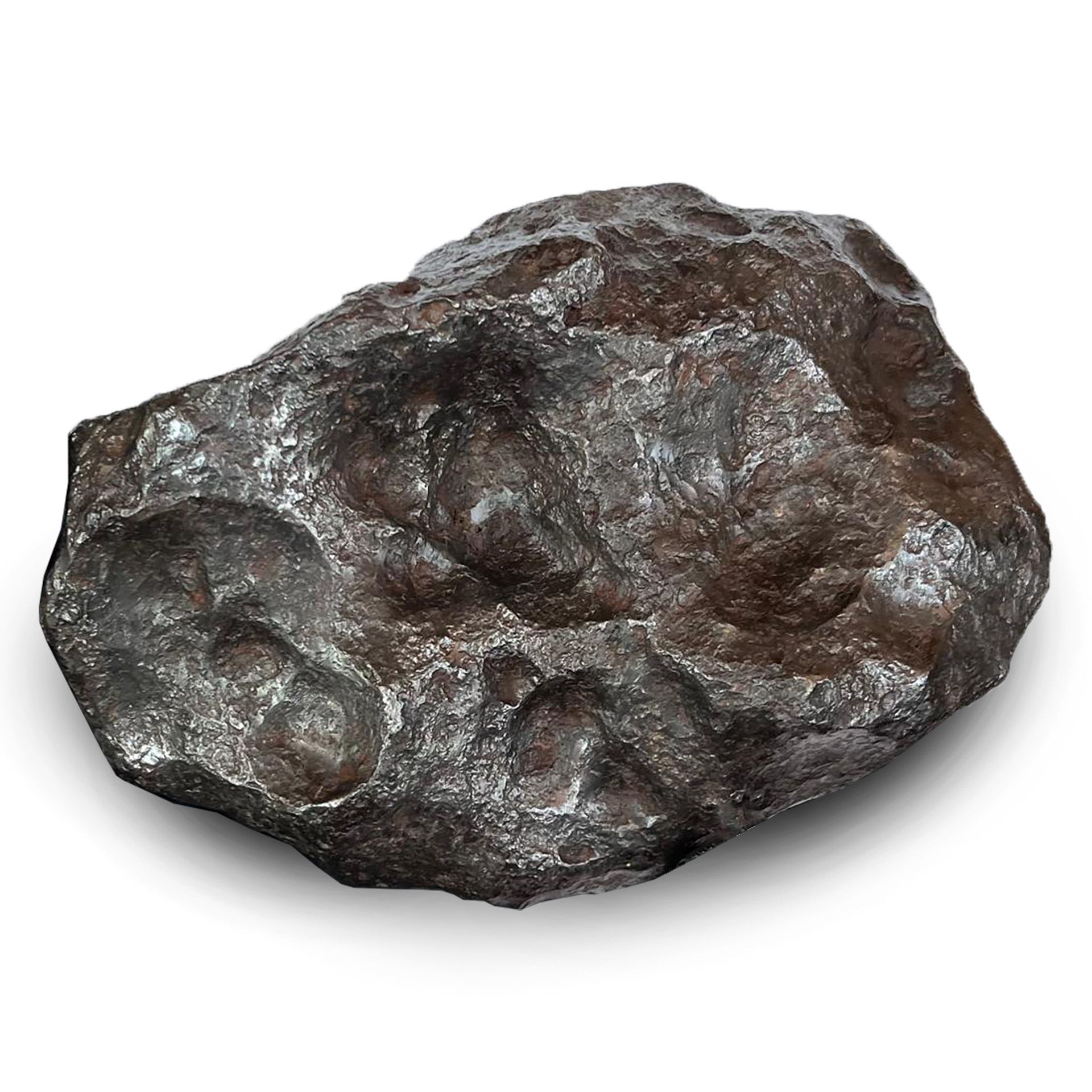
Iron meteorites are composed mainly of iron alloyed with nickel, along with small amounts of other elements.
When iron meteorites are cut and studied, they show distinctive crystalline patterns that form only when metal cools very slowly. Cooling at this rate cannot occur in small objects or close to the surface of an asteroid, where heat escapes rapidly into space. Instead, it requires material to be buried deep inside a large body, insulated by surrounding rock and metal.
For this reason, scientists conclude that iron meteorites originated within the metallic cores of large asteroids, which were later broken apart by powerful collisions.
Stony-Iron Meteorites
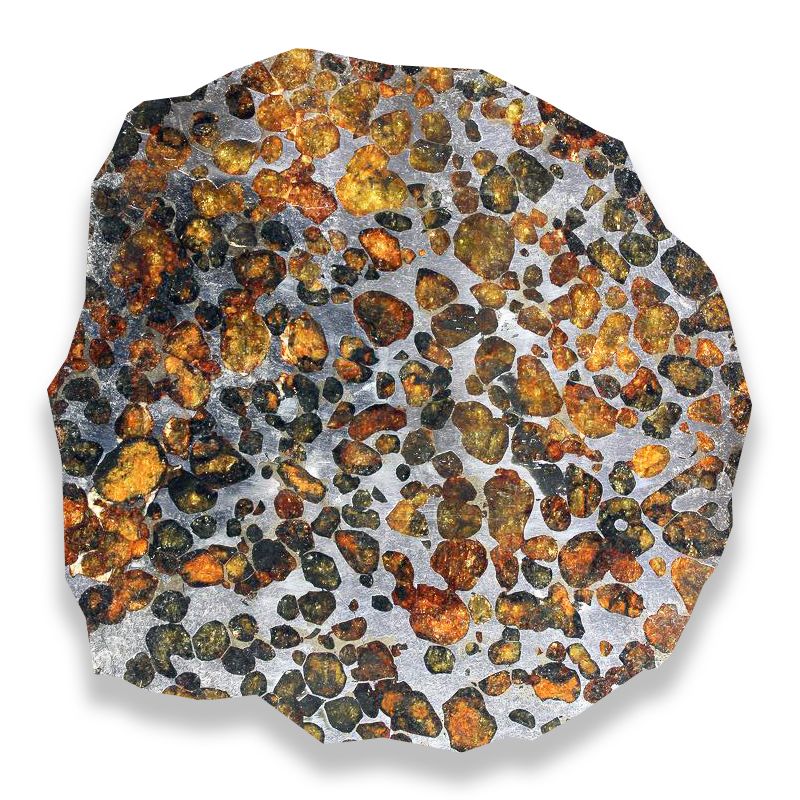
Stony-iron meteorites contain significant amounts of both metal and silicate rock within the same specimen.
This mixed composition indicates that the material formed in an environment where metal and rock were present together during the early history of the parent body. In most cases, heating causes these materials to separate, with denser metal sinking inward and lighter rock remaining above.
Some stony-iron meteorites, called pallasites, contain mineral crystals embedded within metal. This structure is consistent with formation near the boundary between a metallic core and a rocky mantle inside a differentiated asteroid. Because this boundary region is thin and easily disrupted during collisions, stony-iron meteorites are much less common than other types.
Stony Meteorites
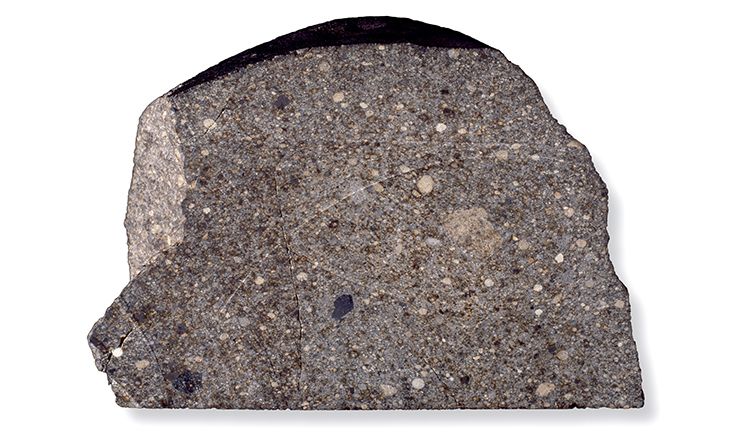
Stony meteorites are composed primarily of silicate minerals and represent material that formed under a wide range of conditions in the early solar system. They are the most common type of meteorite and provide much of what scientists know about planetary formation.
Stony meteorites are divided into two main groups based on whether their parent bodies experienced significant internal heating. Some formed without ever melting, while others come from bodies large enough to heat up and undergo geological change.
Chondrites
Chondrites contain small, rounded mineral grains called chondrules, which formed very early in solar system history. These chondrules were formed when dust particles were briefly heated, melted, and rapidly cooled while floating freely in space before planets formed.
Because chondrites were never part of a body that underwent extensive melting, they avoided internal restructuring. As a result, they preserve material in a state very close to its original form, making them key records of early solar system composition and timing.
Achondrites
Achondrites do not contain chondrules and formed on parent bodies large enough to heat up and partially melt. Once melting began, heavier materials moved inward while lighter materials rose, creating layered interiors similar to those seen in planets.
Achondrites are fragments of these reworked bodies and record the effects of melting, separation, and cooling. This group includes meteorites from the Moon and Mars, as well as from large asteroids that underwent early internal heating.
What happens when a Meteoroide enters the atmosphere?
When a meteoroid enters Earth’s atmosphere, it is traveling at extremely high speed. As it pushes through the air, gas in front of the object is compressed and heats up rapidly.
This intense heating affects only the outer surface of the object. As a result:
- The surface briefly melts
- Material is stripped away in a process called ablation
- A thin, dark outer layer known as a fusion crust forms
This process happens very quickly, usually over the course of only a few seconds. Because the heating is short-lived, heat does not have time to travel deep into the object.
For this reason, meteorites are not molten when they land and are often cool or only slightly warm to the touch by the time they reach the ground.
Myth-Busting: Common Myths About Meteorite Entry
Myth: Meteorites are still burning hot when they hit the ground
In reality, most meteorites cool rapidly during the final seconds of their fall. While the surface may be briefly hot during atmospheric entry, the interior remains relatively cool, and by the time a meteorite lands it is often cool or only slightly warm.
Myth: Meteorites cause fires when they land
Most meteorites are too small and too cool by the time they reach the ground to ignite fires. Large impact events are extremely rare, and ordinary meteorite falls do not produce flames on impact.
Myth: Meteorites always make craters
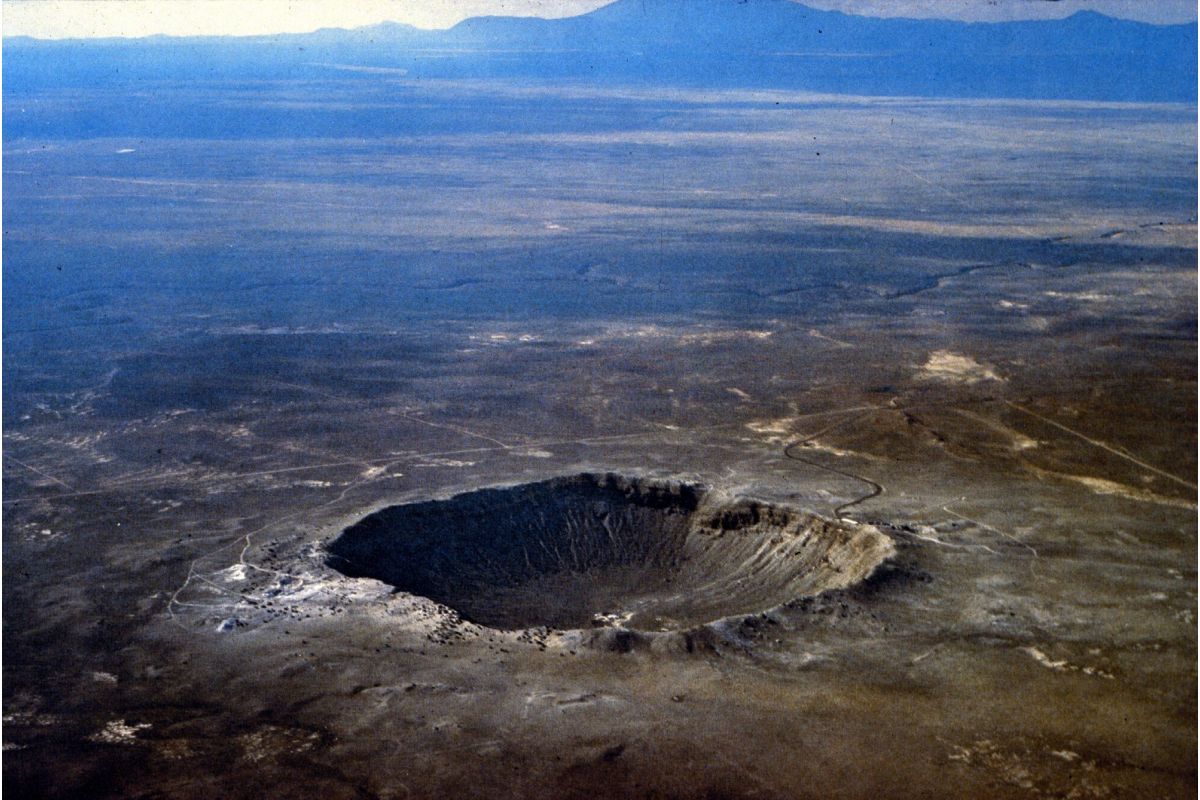
Small meteorites often land gently after slowing down in the atmosphere. Only very large objects traveling at high speed create impact craters, and these events are uncommon in human timescales.
Myth: Shooting stars are meteorites
Most shooting stars are meteors, not meteorites. They are the visible light produced when small particles burn up completely and never reach the ground.
How are Meteorites identified?
Many ordinary Earth rocks resemble meteorites, and misidentifications are common. Outside of a laboratory, it is possible to rule many candidates out, but it is not possible to confirm a meteorite with certainty.
Meteorites often share a few physical traits. They may be denser than most rocks, contain metallic iron, and respond to magnets. These characteristics reflect their formation from compact, metal-bearing material in space.
However, none of these features is conclusive. Several terrestrial rocks and industrial materials can show the same traits. For this reason, field observations should be treated as a filtering step rather than a final identification.
Definitive identification requires laboratory analysis, including detailed examination of mineral structure, chemical composition, and isotopic ratios. Only after this process is a specimen formally classified and entered into the Meteoritical Bulletin Database, which serves as the international reference for recognized meteorites.
Identifying Meteorites: What you can check at home
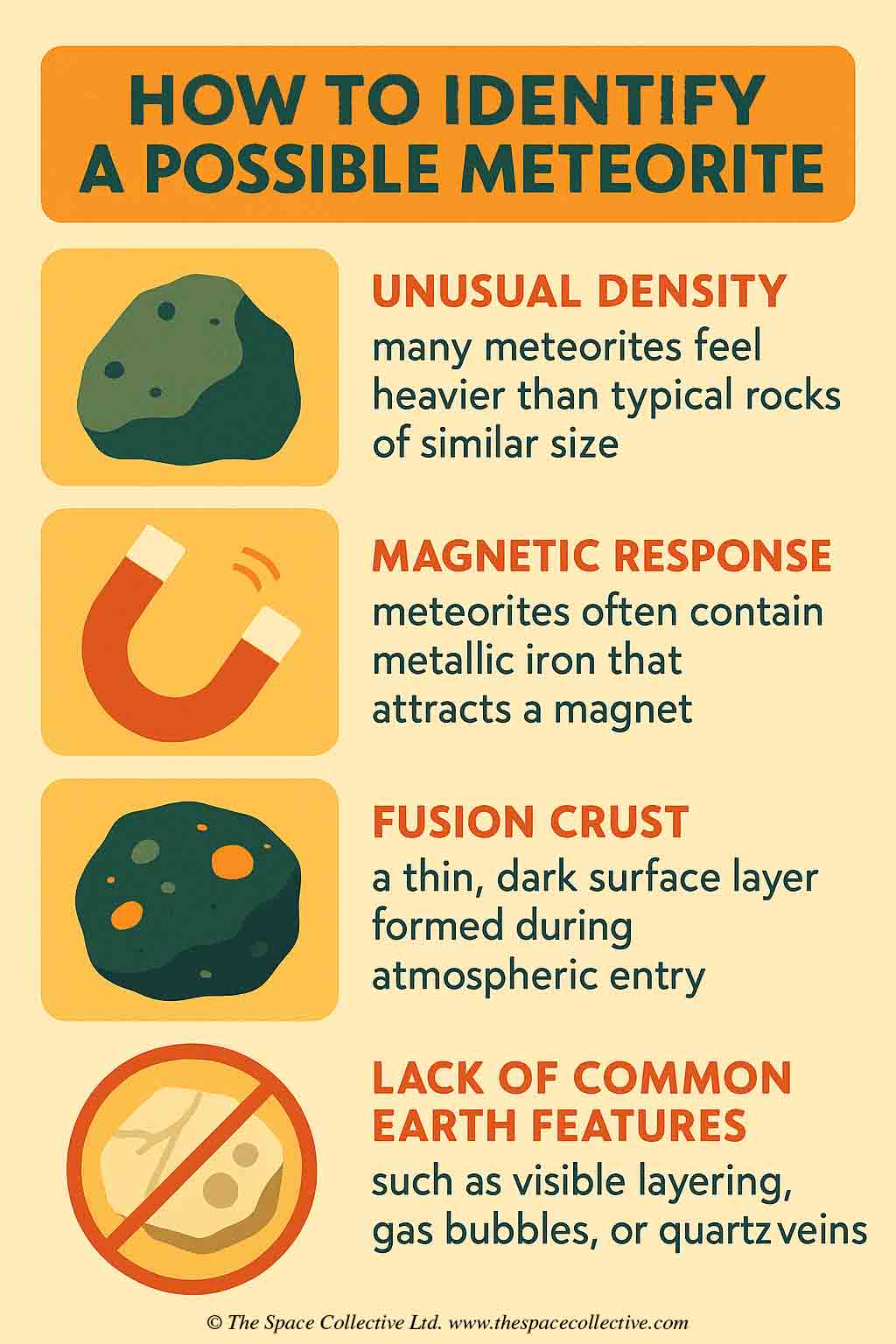
Meteorites cannot be confirmed without laboratory testing, but certain physical features can help determine whether a rock is worth further investigation or is almost certainly not a meteorite.
Outside the laboratory, several indicators can be useful.
Unusual density — many meteorites feel heavier than ordinary rocks of the same size because they formed from compact, metal-bearing material.
Magnetic response — many meteorites contain metallic iron, which causes them to attract a magnet.
Fusion crust — some meteorites retain a thin, dark outer layer formed when their surface briefly melted during atmospheric entry.
Absence of common Earth rock features — such as visible layering, gas bubbles, or quartz veins, which are typical of many terrestrial rocks.
These observations are best treated as a filtering process, not a final determination. Many Earth materials, especially industrial slag, can share several of these traits and are commonly mistaken for meteorites.
For a detailed, step-by-step explanation of how meteorites are evaluated outside the laboratory, along with the most common identification mistakes, see our complete guide to identifying meteorites.
Why Meteorites Matter
Meteorites allow scientists to study parts of the solar system’s history that are no longer preserved on Earth. Because Earth’s oldest rocks have been altered or destroyed by geological activity, meteorites provide access to material that records earlier stages of planetary formation.
By studying meteorites, scientists can investigate:
- How and when the first solid material in the solar system formed, using precise age measurements of their mineral components.
- How planets grew, tracing the progression from tiny dust grains to larger bodies through accretion and collision.
- How water-bearing minerals and complex organic molecules formed in space, before planets like Earth fully developed.
Some meteorites contain organic compounds, carbon-based molecules that form through natural chemical processes. Their presence shows that complex chemistry occurs beyond Earth and does not require biological activity. However, these compounds are not evidence of life, nor do they imply that life existed on the meteorite’s parent body.
A Short History of Meteorites
Humans encountered meteorites long before their extraterrestrial origin was understood. Unusual stones that appeared after bright fireballs were often noted or preserved, even if their source was unclear.
Before the development of metal smelting, meteoritic iron was one of the few naturally occurring metals that could be worked directly. As a result, it was occasionally used to make tools, weapons, and ceremonial objects in several ancient cultures.
For much of recorded history, however, scientists rejected reports of stones falling from the sky. Without a known physical explanation, such accounts were often dismissed as superstition or misinterpretation.
This changed in the early nineteenth century, following carefully documented meteorite falls, most notably the L’Aigle fall in France in 1803, where hundreds of stones were witnessed falling and then studied systematically. The weight of this evidence convinced the scientific community that meteorites were real extraterrestrial objects.
These events helped establish meteoritics as a legitimate scientific field and laid the foundation for modern research into the origins of meteorites and the solar system.
Meteorites Today
Today, meteorites are studied worldwide by researchers, museums, and space agencies. Private collecting is common, but scientific guidelines emphasize preserving information about where and how each specimen was found.
Meteorites continue to complement space missions by providing natural samples from across the solar system.
Why Meteorites Matter
Meteorites are not simply unusual rocks. They are preserved fragments of material that formed during the earliest stages of the solar system, recording processes that no longer occur on Earth.
Because our planet has erased much of its own earliest history, meteorites provide one of the few direct ways to study how solid material evolved into asteroids and planets. When examined carefully, they help explain how Earth formed and how it fits within the broader structure and history of the solar system.